
Summary
Editor's rating
Value for money: not cheap, but you get more than a basic fan
Design: practical, industrial look, not pretty but solid
Materials and build: feels like it’ll last, not flimsy box-store stuff
Durability: built for continuous use, but time will tell
Performance: strong airflow, noticeable cooling, but not quiet on high
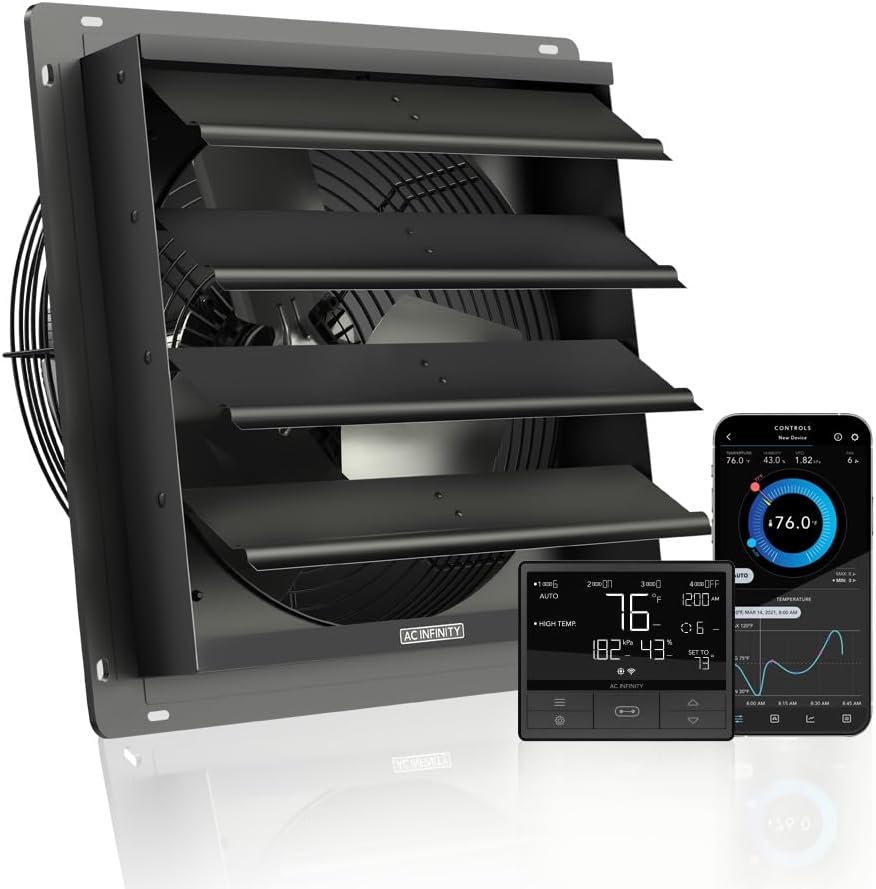
What you actually get with the AIRLIFT T14
Real-world effectiveness: attic and greenhouse use
Pros
- Strong airflow (1513 CFM) with variable speed for real temperature and humidity control
- Solid metal construction with EC motor and IP44 rating, feels built for continuous use
- Smart controller with WiFi, scheduling, and climate-based automation that actually works in practice
Cons
- Loud at higher speeds, not ideal right next to living spaces
- Installation requires cutting, sealing, and power work, not beginner-friendly
- Price is higher than basic exhaust fans, may be overkill for simple, occasional use

Specifications
View full product page →| Brand | AC Infinity |
Smart fan for when your attic feels like an oven
I installed the AC Infinity AIRLIFT T14 in my attic because it was turning into a sauna every sunny afternoon, and the heat was leaking into the second floor. My roof vents weren’t doing much, so I wanted something that could kick in automatically when it got too hot, without me having to think about it. I’ve used it for a few weeks now, through some warmer days, and I’ve got a pretty clear idea of what it can and can’t do.
The short version: it moves a lot of air, the smart controller is actually useful and not just a gimmick, and the build feels solid enough for long-term use. On the flip side, at full speed it’s not quiet, and the install isn’t plug-and-play if you’re not comfortable cutting into walls or running power. It’s not complicated, but it’s definitely not like hanging a picture frame either.
Compared to the old-school attic fans I’ve seen, this one is more modern. The WiFi control, the temperature and humidity programming, and the EC motor make it feel closer to something you’d find in a grow tent setup or a proper workshop, not just a cheap metal propeller shoved in a hole. That said, you still have to deal with the basics: cutting a hole, sealing it, and making sure you’ve got power nearby.
If you’re expecting total silence and a miracle drop of 30°F in your attic, that’s not what this is. But if you’re okay with some fan noise at higher speeds and you want your attic, shed, or greenhouse to stop cooking everything inside, it gets the job done pretty well. I’ll walk through how it’s built, how it runs day to day, and where I think it’s worth the money and where it’s just “okay”.
Value for money: not cheap, but you get more than a basic fan
On the price side, the AIRLIFT T14 is definitely more expensive than the bargain exhaust fans you see at big box stores, but you’re also getting more than just a motor and some blades. You’re paying for the EC motor, the built-in shutters, the smart controller with WiFi, and a generally better build. If all you need is something to occasionally move a bit of air out of a garage, this might be overkill. But if you actually care about temperature and humidity control and want it to run daily without babysitting, the price starts to look more reasonable.
For me, the main value was in the automation. I don’t have to climb into the attic to fiddle with switches or thermostats. The controller handles the on/off and speed changes based on the conditions I set. The app is also useful for checking in remotely, especially in a greenhouse or shed that’s not attached to the house. Is it perfect? No. The app isn’t fancy and the interface could be smoother, but it works and hasn’t glitched out on me so far.
Compared to some no-name fans I’ve used before, where the shutters rattle, the motors get hot, and the controls are basically nonexistent, this feels like a step up. Also, the brand has a decent reputation in the grow and ventilation world, and reviews show a lot of people running their fans 24/7 for years. That gives me a bit more confidence that it’s not going to die after one summer. Still, at this price, I’d expect at least several years of solid service, and anything less would be disappointing.
So in terms of value, I’d rate it as good but not a steal. You’re paying a premium, but you’re getting a more complete, thought-out solution rather than a cheap metal box. If you’re just trying to save every dollar, there are cheaper options. If you want something you can set up, program, and mostly forget about, this sits in a decent spot between budget junk and high-end commercial gear.
Design: practical, industrial look, not pretty but solid
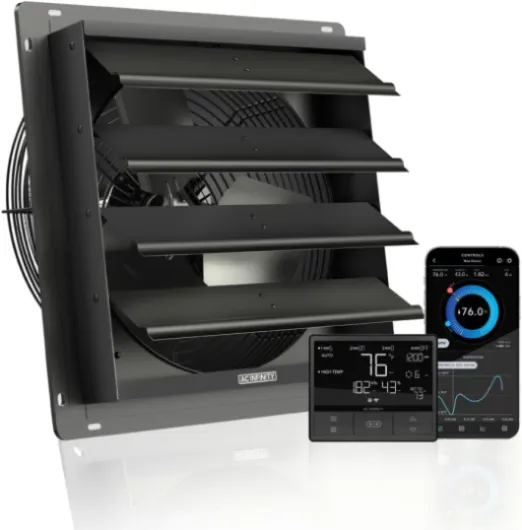
Design-wise, the AIRLIFT T14 is clearly made for function first. The frame is square, powder-coated black steel, with aluminum blades and steel shutters on the outside. It looks more like something you’d see on a workshop wall than in a living room, which is fine because this is not meant to be decorative. The black finish does look cleaner and more modern than the usual shiny galvanized metal fans though, especially from the outside. On my exterior wall, it blends in better than a silver box would have.
The shutters are spring-loaded and close properly when the fan shuts off, which matters a lot if you’re putting this in an attic or conditioned space. You don’t want cold air rushing in during winter or bugs cruising in. In my testing, the shutters closed fully every time, and there was no rattling once it powered down. When the fan kicks on, they swing open without sticking. That sounds basic, but I’ve used cheaper units where the shutters either never fully close or flap in the wind, and it gets annoying fast.
The smart controller design is fairly straightforward. Small rectangular box, clear screen, a few buttons, and a wired probe. It’s not fancy, but it’s readable and the menu system is decent once you get used to it. I mounted mine near the attic access so I can see the temp/humidity at a glance when I go up there. The cable length for the probe is enough for most setups, but if you’ve got a huge space you’ll want to think ahead about where to mount it so the readings actually represent the hottest area.
One thing I noticed: the unit sticks out a fair bit from the wall, so if you’re putting this on a thin shed wall, make sure there’s enough clearance inside for the motor housing and on the outside for the shutters to open fully. It’s not ridiculously bulky, but it’s not flat either. Overall, the design is practical and geared toward performance and durability. It’s not stylish, but for an attic or greenhouse, it looks fine and feels like it can handle daily use without babying it.
Materials and build: feels like it’ll last, not flimsy box-store stuff
The materials are one of the stronger points here. The fan housing is steel with a powder-coated finish, and the blades are aluminum. That combination makes sense for something that might see humidity, dust, and temperature swings. It’s not stainless, but it doesn’t feel cheap or thin. When I handled it during installation, there was no flexing or bending of the frame, and the whole thing has a bit of weight to it (close to 14 pounds). It feels like a proper piece of equipment, not a disposable fan.
The unit is IP44 rated, which basically means it’s resistant to splashing water and dust from any direction. I wouldn’t put it directly in the path of heavy rain without some kind of overhang, but for an exterior wall on a shed, greenhouse, or attic, it should be fine in normal weather. The shutters feel solid enough and didn’t feel like thin tin that’ll warp the first time they get hot in the sun. I’ve bent cheap shutters just by pressing on them a bit; these are clearly thicker.
Inside, the EC motor is the key piece. EC motors are generally more efficient and tend to last longer than old-school shaded-pole motors, and they usually run cooler. I can’t claim long-term data yet, but I’ve seen reviews saying people have had AC Infinity fans running almost nonstop for years. Mine has been running daily (on and off based on temp) and nothing feels warm to the touch beyond what you’d expect. No burning smell, no odd vibration, just the normal fan noise at higher speeds.
The screws and mounting hardware that come with it are also decent. They’re not soft metal that strips as soon as your drill bit looks at them. I mounted into framing, and once it was in, there was no noticeable vibration or rattling. You’ll still want to use some sealant or flashing around the exterior cut-out to keep weather out—that’s on you, not the fan—but the base construction of the unit itself feels like it’ll handle years of use if you don’t abuse it.
Durability: built for continuous use, but time will tell
Durability is always hard to judge early, but there are some clues. The dual ball bearings in the motor, the EC design, and the overall metal construction all point toward a fan that’s meant to run a lot. I’ve had mine cycling on and off daily, and so far there’s no sign of wear: no weird noises, no play in the blades, and no rattling from the housing. The shutters still open and close smoothly, and the finish hasn’t shown any flaking or rust spots yet.
I’ve also read enough user reviews mentioning multi-year use—some people running their AC Infinity fans almost 24/7 for three years—that I’m reasonably confident this isn’t a one-season product. The IP44 rating helps too, especially if you’re using it in a dusty workshop or a humid greenhouse. It’s not waterproof, but it’s clearly built to handle less-than-ideal environments without dying right away.
The main long-term risk I see is more about installation than the fan itself. If you don’t seal the opening properly or you mount it to a flimsy wall, you can end up with water intrusion, rust around the opening, or vibration that eventually loosens things up. That’s not really the fan’s fault, but it will affect how long your whole setup lasts. Mounted to solid framing with proper caulking or flashing, I don’t see any obvious weak points in the unit itself.
So far, I’d say the durability looks promising. It feels like it can handle daily heat cycles in an attic or the humidity swings in a greenhouse without falling apart. Obviously, I’ll need a couple of years to fully confirm that, but based on the build quality and other users’ long-term feedback, I’m comfortable saying it’s likely to outlast the cheaper fans you’d grab off the shelf just to save a few bucks.
Performance: strong airflow, noticeable cooling, but not quiet on high
In terms of raw performance, the AIRLIFT T14 does what it says: it moves a lot of air. The 1513 CFM rating seems believable. In my attic, once it kicks on at higher speed, you can feel the air being pulled through the soffit vents and any other openings. On a warmer afternoon, my attic temperature dropped several degrees compared to before installing the fan. It’s not like stepping into air conditioning, but the upstairs rooms didn’t feel like a blast furnace by the end of the day, which is the whole point.
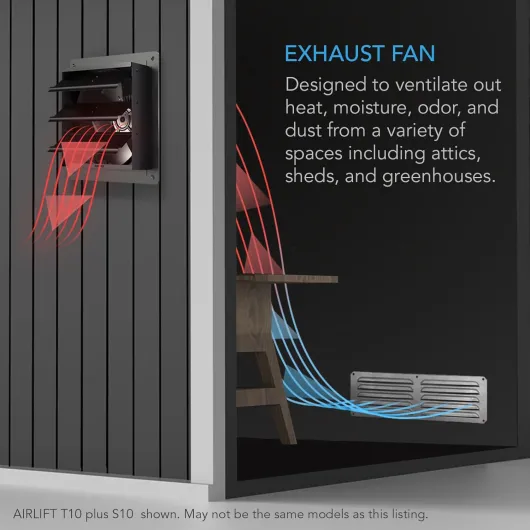
The fan has variable speed, and that’s where the EC motor is handy. On lower speeds, the noise is pretty reasonable—you know it’s on, but it’s more of a steady hum and whoosh. At full speed, it’s loud. Not jet-engine loud, but if this was mounted on a wall right next to a living area, you’d notice it. In my case, it’s in the attic, so I mainly hear a faint noise upstairs when it’s going all out, which I can live with. If you’re putting it in a greenhouse or workshop, you’ll probably be fine with the noise considering how much air it’s moving.
The smart controller helps performance because you can dial in how aggressive you want the fan to be. For example, I set a higher speed for when the attic hits a certain temperature, and a lower speed to maintain a more normal range. You can also factor in humidity, which is handy for greenhouses or damp basements. Once you figure out your thresholds, it basically runs itself. I liked that it doesn’t just slam from off to max; it can ramp, so you’re not constantly shocked by sudden noise.
One thing to be realistic about: this fan is only one part of the system. If your attic or shed has poor intake (no vents, blocked soffits, etc.), the fan will struggle because it’s trying to pull air from nowhere. After I cleared my soffit vents and sealed some gaps, the fan’s impact was much better. So the performance is solid, but you still have to give it proper airflow paths. As long as that’s in place, it’s pretty effective at dumping hot, moist air out and keeping temperatures more reasonable.
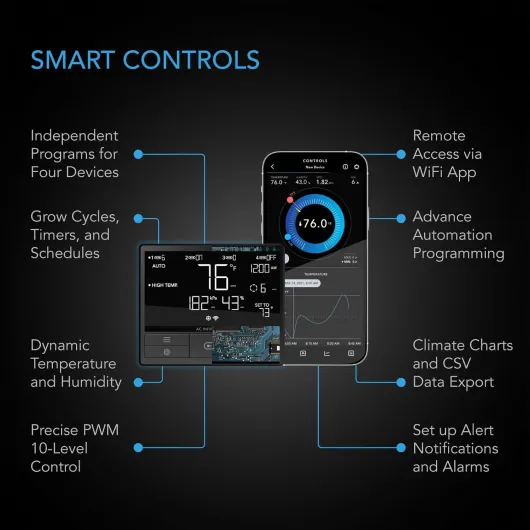
What you actually get with the AIRLIFT T14
Out of the box, the AIRLIFT T14 is basically three things: the 14" exhaust fan with built-in shutters, the smart controller with a probe, and the mounting hardware. The fan itself is about 17" x 17" and sticks out roughly 8" deep, so it’s not tiny. It’s meant for wall mounting, not a little bathroom ceiling vent. The spec sheet says 1513 CFM, 70 watts, and 68 dB, and in practice that matches what I felt and heard: it moves a lot of air and you’ll know when it’s running on high.
The smart controller is the interesting part. You can set temperature and humidity triggers, minimum fan speed, timers, and simple schedules. There’s WiFi, so you can use their app to tweak settings, see the current temperature/humidity, and look at some basic history. I wouldn’t call the app fancy, but it’s miles better than those cheap dial thermostats you guess with. After a couple of days of fiddling, I had it set to kick on above a certain attic temp and ramp down when things cooled off.
In terms of use cases, I tried it in two situations: my attic, and briefly in a small shed where I just cut in a temporary panel to test airflow. In the attic, it helped drop the peak temperature enough that the upstairs rooms didn’t bake as hard. In the shed, it cleared hot, stale air noticeably within a few minutes. It’s clearly designed to exhaust heat and humidity out of enclosed spaces like attics, greenhouses, or workshops, not to gently stir the air in a bedroom.
It’s not perfect though. The controller is powerful but has a bit of a learning curve if you’re not into gadgets. Also, you’ll need to provide your own power solution: there’s a standard C13 connector, but you still need an outlet close by or plan for wiring. For someone who’s never touched basic electrical or carpentry, you may want a friend or a pro to help. But as a complete package, it feels like a pretty solid kit rather than a random fan slapped together with a cheap switch.
Real-world effectiveness: attic and greenhouse use
Effectiveness-wise, I tested this mainly in my attic, but I also helped a friend set one up in a small greenhouse. In the attic, the difference was pretty clear after a few days of similar weather. Before the fan, the attic was getting extremely hot by mid-afternoon, and the second floor would feel stuffy and warm into the evening. After installing the AIRLIFT T14 and letting the controller handle things, the attic still got warm, but not that brutal, trapped heat feeling. The upstairs rooms cooled down faster once the sun dropped, and the AC didn’t seem to run as long.
In the greenhouse, the goal was more about controlling humidity and preventing the plants from getting cooked on sunny days. We mounted the fan on one end and used passive vents on the other. With the humidity and temperature triggers active, the fan would start up when things crept too high and then back off once it stabilized. My friend mentioned the internal temperature stayed more stable and the air didn’t feel as stagnant. It’s not a climate control system, obviously, but it does a solid job of keeping fresh air moving through the space.
What I liked is that it’s not just an on/off dumb fan. The combination of dynamic temperature and humidity programming, minimum speed, and scheduling lets you tune it to your situation. For example, you can keep it at a low background speed to prevent moisture build-up, then kick to higher speeds when the temperature spikes. That’s more effective than simple “on at X degrees, off at Y degrees” because you don’t get such big swings.
On the downside, if you expect this one fan to fix a badly insulated attic or a greenhouse that bakes in full sun with no shade, you’re going to be disappointed. It helps, but it’s not magic. Think of it as a strong exhaust that works best when combined with proper intake vents, some insulation, and common sense. In that context, I’d say it’s very effective at what it’s designed to do: get hot, humid, stale air out of a space reliably.
Pros
- Strong airflow (1513 CFM) with variable speed for real temperature and humidity control
- Solid metal construction with EC motor and IP44 rating, feels built for continuous use
- Smart controller with WiFi, scheduling, and climate-based automation that actually works in practice
Cons
- Loud at higher speeds, not ideal right next to living spaces
- Installation requires cutting, sealing, and power work, not beginner-friendly
- Price is higher than basic exhaust fans, may be overkill for simple, occasional use
Conclusion
Editor's rating
Overall, the AC Infinity AIRLIFT T14 is a pretty solid option if you actually need serious ventilation and not just a token fan. It moves a lot of air, the smart controller is genuinely useful, and the build quality is a step above the cheap, rattly units I’ve dealt with before. In my attic, it noticeably took the edge off the heat and made the second floor more bearable, and in a greenhouse setup it did a good job keeping temperature and humidity from getting out of control.
It’s not perfect. At full speed it’s definitely not quiet, and the install requires some basic DIY skills—cutting a hole, mounting to framing, sealing the exterior, and sorting out power. The app and controller are more functional than pretty, and if all you want is a simple on/off fan, this might feel like overkill for the price. But if you want something you can configure once and let it manage your space automatically, it hits a nice balance between control, airflow, and durability.
I’d recommend it for people with hot attics, greenhouses, workshops, or sheds who are tired of baking in their own buildings and are willing to do a proper install. If you’re extremely sensitive to noise or just need a basic, cheap exhaust for occasional use, you can probably save money with a simpler fan. For regular, automated ventilation where you care about temperature and humidity control, this is a strong, no-nonsense choice.